
 English
 中文简体
中文简体
 русский
 Español
 عربى
عربى
Product Consultation
Your email address will not be published. Required fields are marked *
For applications requiring a single, continuous filament with high tensile strength, abrasion resistance, and controlled elongation, nylon monofilament yarn outperforms polyester and polypropylene by a factor of 2-3x in knot strength and 1.5-2x in abrasion resistance. The direct conclusion: select nylon monofilament yarn based on denier (fineness), tenacity (breaking strength in grams per denier), elongation at break (15-35% depending on type), and UV stabilization. Nylon 6,6 monofilament offers higher melting point (255°C vs. 220°C for nylon 6) and better chemical resistance, making it suitable for industrial applications. Nylon 6 monofilament is more flexible and less expensive, preferred for textile and consumer goods.
Nylon monofilament yarn is sized by denier (weight in grams of 9,000 meters of yarn) or directly by diameter in millimeters or microns. Denier ranges from 20 (ultra-fine, 0.05mm diameter) for hosiery and sheer fabrics, to 5,000+ (0.8-1.2mm diameter) for industrial brushes and fishing leader lines. The relationship between denier and diameter is not linear: a 200 denier monofilament has approximately 0.15mm diameter; a 1,000 denier has approximately 0.35mm diameter; a 5,000 denier has approximately 0.8mm diameter. For bristle applications (toothbrushes, paint brushes), monofilament is specified by diameter in millimeters (0.15mm to 0.60mm) rather than denier.
| Application | Denier Range | Diameter (mm) | Typical Tenacity (g/den) | Elongation (%) |
|---|---|---|---|---|
| Hosiery, sheers, lingerie-- | 20-70-- | 0.05-0.09-- | 4-5-- | 25-35%-- |
| Fishing lines, leader-- | 200-4,000-- | 0.15-0.70-- | 6-9-- | 20-25%-- |
| Industrial brushes-- | 500-5,000-- | 0.25-0.80-- | 5-7-- | 15-20%-- |
| Sutures (medical)-- | 30-200-- | 0.07-0.15-- | 5-7-- | 20-30%-- |
| String trimmer line-- | 10,000-30,000-- | 1.3-2.5-- | 4-6-- | 15-20%-- |
| Textile zipper tapes-- | 100-300-- | 0.10-0.18-- | 4-6-- | 25-35%-- |
Nylon monofilament yarn is manufactured in two primary polymer grades: nylon 6 (polycaprolactam) and nylon 6,6 (polyhexamethylene adipamide). Nylon 6,6 has a higher melting point (255°C vs. 220°C for nylon 6), higher crystallinity (50-60% vs. 35-45%), and better chemical resistance to alkalis and organic solvents. Nylon 6,6 also has lower moisture absorption (2.5-3.0% at 65% RH vs. 3.5-4.0% for nylon 6), meaning better dimensional stability in humid environments. The trade-off: nylon 6,6 is more difficult to process (requires higher extrusion temperatures) and costs 15-25% more than nylon 6. For applications requiring exposure to high temperatures (engine compartments, hot water), select nylon 6,6. For general textile and brush applications, nylon 6 is adequate and more economical.
For monofilament fishing line, both nylon 6 and nylon 6,6 are used, but nylon 6 monofilament has better knot strength (90-95% of line strength vs. 80-85% for nylon 6,6) due to its higher elongation and flexibility. For industrial monofilament used in abrasive environments (conveyor belts, filter fabrics), nylon 6,6's higher abrasion resistance (30-40% better by Taber abrasion testing) justifies the premium. For applications requiring FDA compliance (food contact, medical devices), both grades are acceptable when manufactured with appropriate additives, but nylon 6,6 has lower extractables (less than 0.1% vs. 0.2-0.3% for nylon 6).
Tenacity (grams per denier, g/den) measures the breaking strength of nylon monofilament yarn relative to its weight. Standard tenacity nylon monofilament ranges from 4-6 g/den; high-tenacity (HT) grades achieve 7-9 g/den; ultra-high tenacity (UHT) grades reach 9-11 g/den. For context, a 1,000 denier HT nylon monofilament (0.35mm diameter) has a breaking strength of approximately 7-9 kg. High-tenacity monofilament is achieved by higher draw ratios (5.5-6.5x vs. 4.5-5.0x for standard) during extrusion, which aligns polymer molecules more completely. However, increased tenacity reduces elongation: standard tenacity monofilament elongates 25-35% before break; HT elongates 18-22%; UHT elongates 12-16%.
For fishing lines and leader material, specify HT or UHT nylon monofilament (8-10 g/den) to maximize strength for a given line diameter. Field data shows that UHT monofilament fishing line has 30-40% higher knot strength than standard tenacity lines of the same diameter. For brush bristles, lower tenacity (4-5 g/den) is preferred because the bristle needs to flex and recover without breaking; higher tenacity bristles are more brittle and snap after fewer flex cycles. For sutures and medical applications, tenacity of 5-7 g/den with elongation of 20-30% provides the optimal balance of strength and tissue handling.
Nylon monofilament yarn is elastic—it stretches under load and recovers when the load is removed. Elongation at break ranges from 15-35% depending on the draw ratio; elastic recovery (return to original length after stretching) is 90-95% for strains up to 8-10%. This elasticity is a key advantage over polyester monofilament (which has 10-15% elongation and 70-80% recovery) and polypropylene (20-25% elongation but poor recovery). For applications requiring shock absorption (fishing lines, mooring lines, safety netting), nylon's elasticity prevents sudden failure under impact loading. For dimensional stability applications (screen printing mesh, filter fabrics), lower elongation (15-20%) is preferred to prevent sagging under load.
The elastic modulus (stiffness) of nylon monofilament is approximately 2-3 GPa (gigapascals), compared to 5-7 GPa for polyester and 1-2 GPa for polypropylene. For brush bristles, modulus affects tufting and bristle stand-up: a stiffer bristle (higher modulus) holds its shape better in the brush block but may be harder on the brushed surface. For dental floss and interdental brushes, lower modulus (softer bristle) is preferred to avoid gum damage. For industrial scrub brushes, higher modulus nylon (achieved by higher crystallinity) provides more aggressive cleaning action.
Untreated nylon monofilament degrades rapidly under ultraviolet (UV) light exposure. After 500 hours of accelerated UV exposure (Xenon arc, ASTM G155), untreated nylon monofilament loses 70-80% of its tensile strength; UV-stabilized nylon loses only 10-20%. UV stabilizers (carbon black, hindered amine light stabilizers (HALS), or UV absorbers) are added during extrusion. Carbon black (2-3% loading) provides the best UV protection but limits the monofilament to black color. For colored monofilaments, HALS additives provide adequate protection (50-60% strength retention after 1,000 hours) without affecting color.
For outdoor applications (awnings, outdoor furniture fabrics, agricultural netting), specify UV-stabilized nylon monofilament with a minimum of 1,000 hours of accelerated UV testing. In real-world outdoor exposure (Florida or Arizona), UV-stabilized nylon monofilament lasts 2-3 years before significant strength loss (30-40%); untreated nylon fails within 6-12 months. For marine applications (boat covers, mooring lines), specify carbon-black-stabilized nylon (black only) for maximum UV resistance. For fishing line, UV resistance is less critical because the line is underwater during use, but monofilament stored in sunlight (on a boat deck) degrades rapidly; store fishing line in opaque containers between uses.
Nylon monofilament has excellent inherent abrasion resistance due to its tough, flexible polymer structure. In standard abrasion testing (ASTM D3884, Taber abraser with H-18 wheels), nylon monofilament withstands 2,000-3,000 cycles before failure, compared to 1,500-2,000 for polyester and 800-1,200 for polypropylene. For bristle applications, abrasion resistance translates to bristle tip wear: a nylon brush bristle lasts 2-3x longer than a polypropylene bristle under the same use conditions. For fishing line, abrasion resistance is critical when the line contacts rocks, coral, or barnacles; nylon monofilament is superior to fluorocarbon (which is stiffer and more prone to nicking).
Surface lubricants (silicone oil, PTFE coatings) can be applied to nylon monofilament to reduce friction. Lubricated monofilament (typically 0.5-1.5% silicone by weight) has 40-60% lower coefficient of friction (COF: 0.15-0.20 vs. 0.35-0.45 for unlubricated). For sewing threads and textile applications, lubricated monofilament reduces needle heating and thread breakage. For fishing line, lubricated monofilament casts farther (10-20% longer casts) and reduces line twist. However, lubricants can reduce knot strength (5-10% loss) because the knot slips more easily. For brush bristles, surface lubrication is not used because it reduces the bristle's ability to hold and transfer fluids (paint, water, cleaning solutions).
Nylon absorbs moisture from the air, which affects its dimensions and mechanical properties. At 50% relative humidity (RH), nylon monofilament absorbs 2-3% moisture by weight, increasing diameter by 1.5-2.5%; at 100% RH (saturated), absorption reaches 8-10%, with diameter increase of 4-6%. This hygroscopic expansion is reversible; the monofilament returns to its original dimensions when dried. For applications requiring tight dimensional tolerances (screen printing mesh, filter fabrics, medical catheters), account for this expansion. A 100-micron monofilament (dry) expands to 104-106 microns at 100% RH; this 4-6% change can affect filtration efficiency or printing registration.
Water absorption also reduces tensile strength. At saturation (100% RH), nylon monofilament loses 15-25% of its dry tensile strength; at 65% RH (typical indoor conditions), the loss is 5-10%. For fishing line, this means a line rated at 10 kg breaking strength dry may test at 8.5-9 kg after soaking in water for 24 hours. This reduction is factored into manufacturer ratings, but users should be aware that "dry" testing overestimates in-use strength. For industrial monofilament used in wet environments (filtration, marine ropes), specify nylon 6,6 which absorbs 20-30% less moisture than nylon 6, maintaining higher wet strength.
Nylon monofilament yarn is produced by melting nylon polymer chips (240-290°C, depending on grade) and extruding the molten polymer through a spinneret (a metal plate with precisely drilled holes). The extruded filament passes through a water quench bath (20-40°C) to solidify it, then through a series of heated godet rollers that draw (stretch) the filament to 4-6.5 times its original length. Drawing aligns the polymer molecules along the filament axis, increasing crystallinity, tenacity, and modulus while reducing diameter and elongation. After drawing, the monofilament is annealed (heat-set under tension) to lock in the molecular orientation.
Critical process parameters that affect monofilament quality: spinneret hole geometry (round, trilobal, or multilobal cross-sections), quench bath temperature, draw ratio, and annealing temperature. Round cross-section is standard for most applications. Trilobal (three-sided) cross-section increases surface area for the same denier, providing better wicking and covering power in textiles. Multilobal (star-shaped) cross-section creates air gaps between adjacent monofilaments, improving insulation and moisture transport in performance fabrics. For brush bristles, round cross-section is standard; for paint brushes, flagging (splitting of the tip) is induced by mechanical abrasion after extrusion to improve paint pickup.
Purchasing nylon monofilament yarn requires attention to quality control documentation. Request a certificate of analysis (COA) from the manufacturer showing: denier (ASTM D1907), tenacity (ASTM D3822), elongation at break (ASTM D3822), boiling water shrinkage (ASTM D2259), and moisture regain (ASTM D629). For critical applications (medical devices, aerospace textiles), require additional testing: dimensional stability (ASTM D1776), accelerated UV aging (ASTM G155), and extractables (USP <91> for medical grades).
Field inspection of received monofilament: check for broken filaments (single filament breaks within a yarn package; acceptable up to 2 per kilogram), inconsistent denier (measure diameter with a calibrated micrometer at 10 random points; standard deviation should be less than 3% of mean), and visible contaminants (black specks, gels). For natural (undyed) nylon, the filament should be clear to slightly translucent; hazy or cloudy appearance indicates poor polymer mixing or contamination. For dyed monofilament, check for color uniformity across the package; a color difference (ΔE) above 1.5 (CIELAB scale) is visible and should be rejected for apparel applications.
Nylon monofilament yarn serves diverse industries, each with specific grade requirements. Fishing lines and leaders: HT or UHT nylon 6 monofilament, 200-4,000 denier, 8-10 g/den tenacity, 18-22% elongation, UV-stabilized for surface use (but not required for deep trolling). Industrial brushes and brooms: standard nylon 6 or 6,6 monofilament, 500-5,000 denier, 5-7 g/den tenacity, 15-20% elongation, with UV stabilizers for outdoor use. Textile monofilament (zippers, hook-and-loop fasteners): nylon 6, 100-300 denier, 4-6 g/den, 25-35% elongation, trilobal cross-section for improved handle. Medical sutures: nylon 6 or 6,6 with USP Class VI certification, 30-200 denier, 5-7 g/den, 20-30% elongation, sterile and non-pyrogenic.
For niche applications: string trimmer line (weed whackers): specialized nylon copolymer (nylon 6 with impact modifiers), 10,000-30,000 denier (1.3-2.5mm diameter), 4-6 g/den tenacity, 15-20% elongation, often reinforced with fiberglass or abrasive particles. Screen printing mesh: nylon 6,6 monofilament, 200-500 denier (0.10-0.16mm diameter), 6-8 g/den, 15-20% elongation, very high dimensional stability (low shrinkage) for registration accuracy. Dental floss: nylon 6 monofilament or multifilament (twisted), 500-1,500 denier, PTFE-coated for low friction, waxed or unwaxed. Conduct a failure mode analysis for your specific application: if failure occurs by tensile break (overload), increase denier or tenacity; if by abrasion, increase denier or switch to nylon 6,6; if by UV degradation, add stabilizers; if by fatigue (cycling), reduce tenacity (higher elongation monofilament withstands more flex cycles).
For nylon monofilament used in fishing lines, ropes, or medical sutures, the termination (knot or tie) is often the weakest point. A well-tied knot retains 80-95% of the monofilament's rated breaking strength; a poorly tied knot retains only 40-60%. The best knot for nylon monofilament is the Palomar knot (retains 85-92% of line strength), followed by the Improved Clinch knot (80-88%). Avoid the simple overhand knot (60-70% retention) and the square knot (50-60%). For monofilament used in netting, the knot type (standard fishing net knot, auto-net knot, or knotless mesh) affects both strength and cost. Knotless mesh (woven, not tied) retains 90-95% of yarn strength but costs 20-40% more to produce.
For industrial monofilament used in brushes and bristles, the termination method is mechanical (tufting or stapling into a brush block). Tuft retention force (the force required to pull a bristle tuft from the block) should be at least 5-10 kg for a 5mm diameter brush hole. Poor tuft retention leads to bristle loss and brush failure. For monofilament used in textile applications (zippers, hook-and-loop), the filament is woven or knitted, not terminated individually. For fishing line, always wet the knot before tightening; dry nylon monofilament generates frictional heat when pulled tight, reducing knot strength by 20-30% due to localized polymer melting.
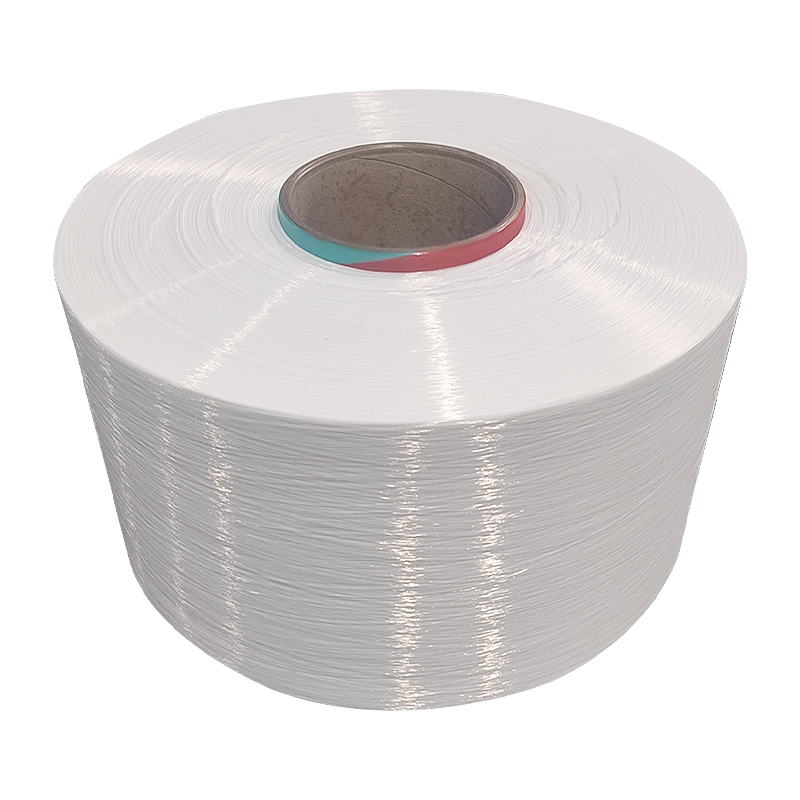
The Master Filament of Modern Textiles: How High-Throughput Nylon Mother Yarn Engineering Shapes the Precision Monofilament Supply Chain
2026-06-04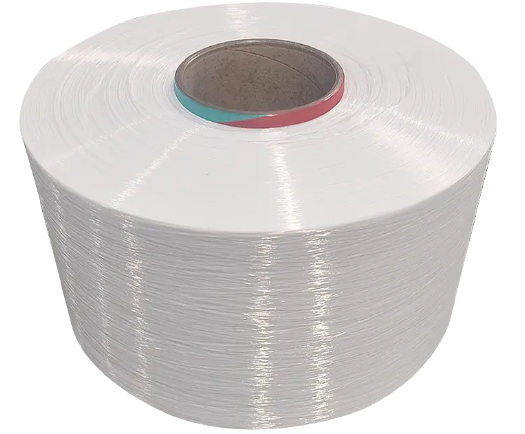
Nylon Mother Yarn: The Foundation of High-Performance Textile Production
2026-06-18Your email address will not be published. Required fields are marked *
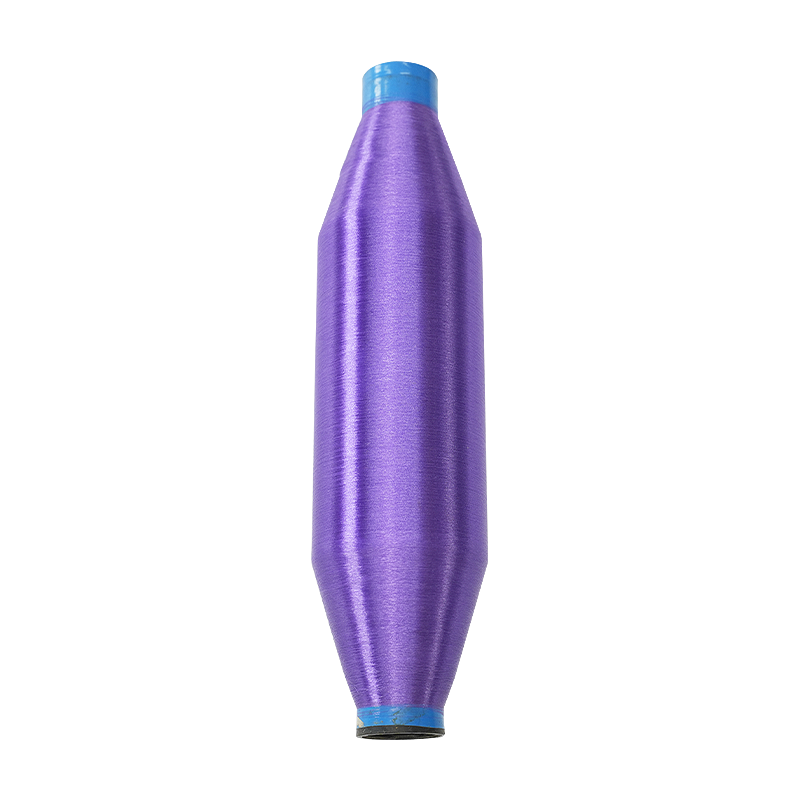
Single Strand Biodegradable Yarn is a single-strand structure, consisting of a single fiber bundle with no multiple strands tangled together. This structure makes the yarn softer, and smoother and exh...
See Details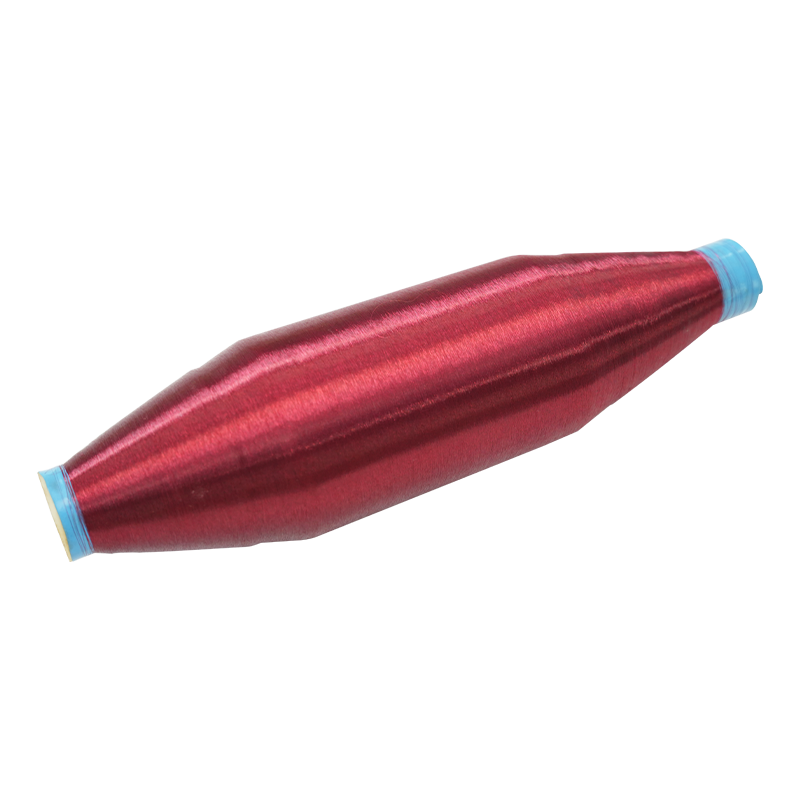
Antiviral nylon Monofilament Yarn can inhibit the survival of viruses on the surface of the yarn, which can effectively reduce the risk of virus transmission and improve user safety. The yarn has a mo...
See Details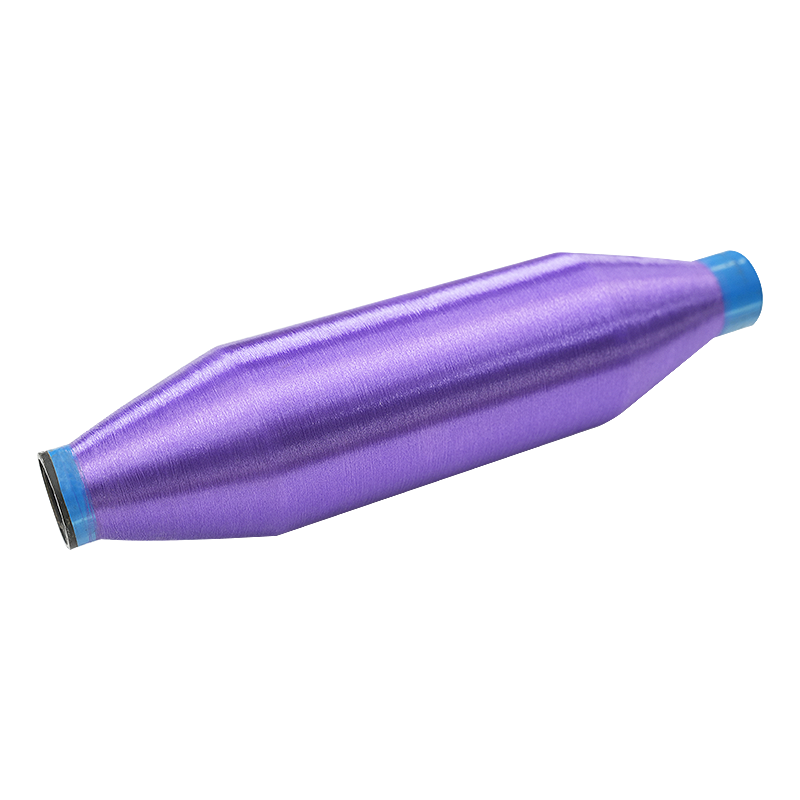
Graphene yarns can be produced by a variety of methods, including chemical vapor deposition (CVD) and wet spinning. In CVD, graphene is grown directly on a substrate, which is then removed to obtain g...
See Details
Nylon stretch sportswear yarn is a yarn used to make sportswear and other clothing that require high breathability. Nylon fiber has good breathability, which helps to wick away perspiration and keep t...
See Details
Nylon elastic yarn for textile use has a wide range of applications. Nylon elastic yarn is suitable for the manufacture of various textiles, such as underwear, socks, sportswear, swimwear, elastic fab...
See Details
Polyester blended FDY yarn is a standard 50D yarn made from a blend of polyester and nylon. It combines the characteristics of both fibers and has durability and breathability. It has a wide range of ...
See Details
Polyester FDY yarn for weaving has high strength. After FDY yarn is fully stretched, the strength is even better and is suitable for manufacturing fabrics requiring high strength. The fabric made usin...
See Details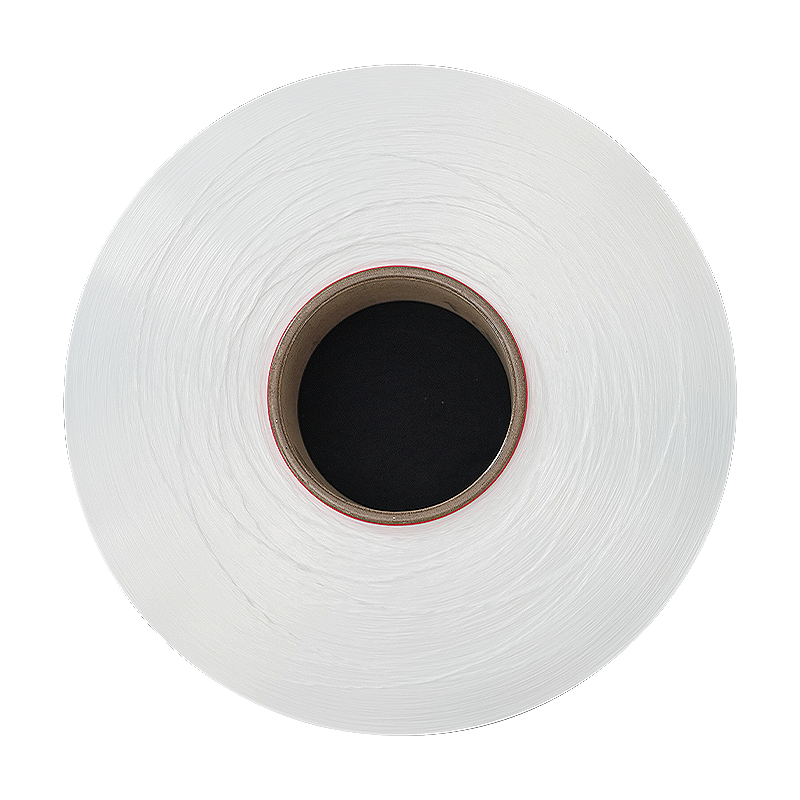
Fully stretched polyester blended yarn is made of a blend of polyester and nylon. Polyester itself has good wear resistance. After full stretch processing, the strength and softness of the yarn increa...
See Details
140D Durable low-melt FDY yarn is suitable for the manufacture of various textiles, especially for the preparation of composite fabrics, such as polyester-cotton blended fabrics or elastic fabrics. Th...
See Details
High shrinkage blended polyester yarn has a high shrinkage rate and is suitable for textile manufacturing that requires shrinkage treatment, such as making pleated fabrics or textile shaping. Because ...
See Details
Water-repellent blended FDY yarn has good waterproof properties. This characteristic makes Water-repellent blended FDY yarn a greater advantage when making textiles with high waterproof requirements s...
See Details
Stretch durable FDY yarn has good elasticity and can return to its original shape after being stressed, giving the textile a comfortable wearing feel and good ductility. It can fit the contours of the...
See DetailsAddress: Duntou industrial park, haian county, nantong city,jiangsu province ,China.
TEL: +86 15850491859
E-mail: sales-betty@hsnylon.com
If You Are Interested In Our Products, Please Consult Us
 Wholesale Nylon Filament Yarn Manufacturers